



What my experience was like as a Product Designer for Avon/Natura Latin America.
01 / SUMMARY
02 / Process
03 / Bienvenido a Hispana
04 / A little bit about the work routine
06 / Testing and validation
07/ A few of the results


02 / PROCESS
empathize
>
research
>
ideate
>
prototype
>
test
>
handoff
& metrics
EMPATHIZE
03 / BIENVENIDO A HISPANA
Natura is a Brazilian multinational cosmetics, perfumery, and personal care company and also owns the Avon brand in Latin America. I had the opportunity to work as a Product Designer at this large company, working in the e-commerce segment, exclusively serving Hispanic customers and units in Argentina, Chile, Colombia, Ecuador, Mexico, and Peru.
The target audience for the demands was the brand's saleswomen, internally referred to as beauty consultants: a diverse group of women, ranging from tech-savvy Generation Z youngsters to older women who preferred good old-fashioned paper catalogs. This created a very interesting challenge! At the same time, although they were all Latin American, the fact that these women were from different countries also brought a strong regional influence, with only the Spanish language as a common ground.


RESEARCH & IDEATE
04 / A LITTLE BIT ABOUT THE WORK ROUTINE
TEST
05 / TESTING AND VALIDATION
As the users were located in different Latin American countries, all tests, whether AB, card sorting, or usability, were conducted remotely, either asynchronously via Maze or synchronously via screen access and sharing on Microsoft Teams. It is worth mentioning that managing tests in a language other than my native language was a unique experience. Challenging, but equally rewarding! After the tests were conducted, the results were measured, adjustments were made, and the project moved on to the accessibility and development stages.
When the front-end code was already at a satisfactory stage of operation, the accessibility test was conducted. At this stage, a consultant or analyst with visual impairment was invited to navigate the project screens with the support of assistive technologies. Finally, when the project was ready for the production stage, a final analysis called Design QA was performed. At this stage, I was able to work with a Quality Assurance (QA) professional to ensure full compliance between the prototype and the website.
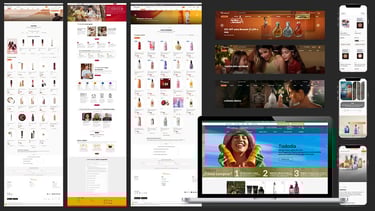
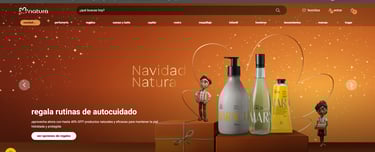
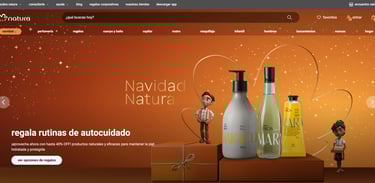
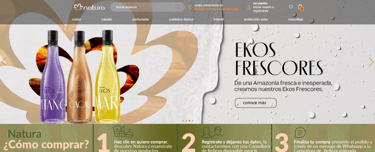
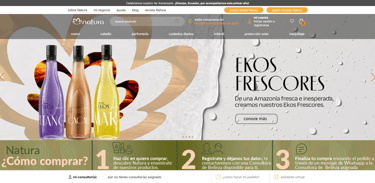
Note: Due to contractual guidelines, I am not permitted to show internal interfaces or prototypes directly in my portfolio. However, here is a sample of the Natura public portal, free of any confidential information and easily found on the internet.
After the e-commerce site went live, the metrics phase began. At that point, I monitored the project's performance and evaluated opportunities for improvement and evolution. I was not always able to participate in this stage in all the projects I worked on, focusing specifically on new payment attempts. Often, team reassignments, priority changes, or scope changes meant that my role ended at the hand-off phase, with monitoring subsequently taken over by another designer, due to the consulting model. However, I can highlight the following point:
RESULTS
06 / A FEW OF THE RESULTS
Natura's public image
THANK YOU!



¡Trabajo en español la mayor parte del tiempo!
Although I did not participate in the prioritization of projects, a decision made by Product Managers, I followed this sequence when starting a new demand: project prioritization > research > validation of research with the business > prototyping > validation of the prototype with the business and technology > accessibility > testing > adjustments and handoff > monitoring of metrics and user feedback.
As in many companies, at Natura the product design area is part of the IT department. There, I was able to work following the agile methodology, that is, making small deliveries based on a minimum viable product (MVP) and its subsequent evolutions. The teams were divided into squads, and the schedules were based on sprints. When a design project was prioritized, the first step was to understand what objectives (OKRs) were expected, dividing the results into “what to expect from the MVP” and “what to expect from the evolutions". Once the metrics were defined, the research stage began, usually pre-constructed by the marketing area. In general, the first steps involved a lot of discovery and meetings between different squads to maintain the tone used in a giant e-commerce platform! Especially in areas that converged. I was also able to conduct research directly with beauty consultants who could be interviewed, monitor online feedback such as likes and comments on Google Play and the Apple Store, talk to customer service teams, and consult specialized research institutes.
To create the prototypes, I had access to the Natura design system. I could work on e-commerce pages, especially in areas such as shopping cart, order history, shipping/delivery options, new payment attempts, and order tracking. These prototypes were open to developers and the business area from the initial meetings. Due to the nature of an e-commerce portal, the main difficulty was not technical but rather maintaining the interface standard, even with established voice usage guidelines and a design system. For this reason, meetings with other teams from related areas were constant, including activities such as design critique and accessibility checks, which were also being updated at that time.
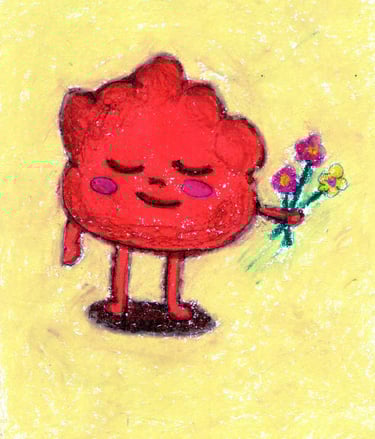
Selín, mascot of the e-commerce squads.
Of the consultants whose orders were rejected at the payment stage, 11% returned to make a new attempt, generating savings of R$1.4 million.
It should be noted that at that time, this new e-commerce feature had only been launched for pilot consultants in the MVP model.
LEARNINGS
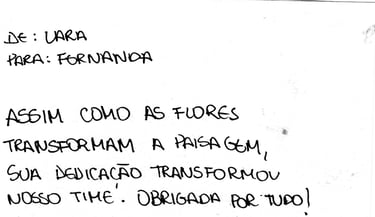
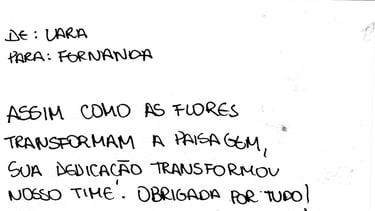
At the end of the project, there was a brief acknowledgment of my work in the squad for the results achieved. A card designed and handwritten by Natura's Design Lead shows how much the company truly values its people, whether they are beauty consultants, internal employees, or contractors. This demonstrates a truly human and respectful connection with others, setting an example for any other team in any industry.
ACKNOWLEDGEMENTS
Working in e-commerce for a major cosmetics retailer, which certainly holds fond memories for many of us—after all, who hasn't leafed through a Natura catalog?—provided me with a wealth of learning experiences, from design thinking methodologies, double-diamond processes, and agile methodologies, to international experience with incredible people from all over Latin America.